You've created something tangible. You have employees that depend on you, customers that trust you, and a business that is growing. However, the people aspect of the business, your HR systems, policies, hiring decisions, and employee situations are still being handled in a haphazard, urgent, and good-intentioned way. You don't need a junior to support you at this stage; you need senior HR leadership, but not full-time yet.
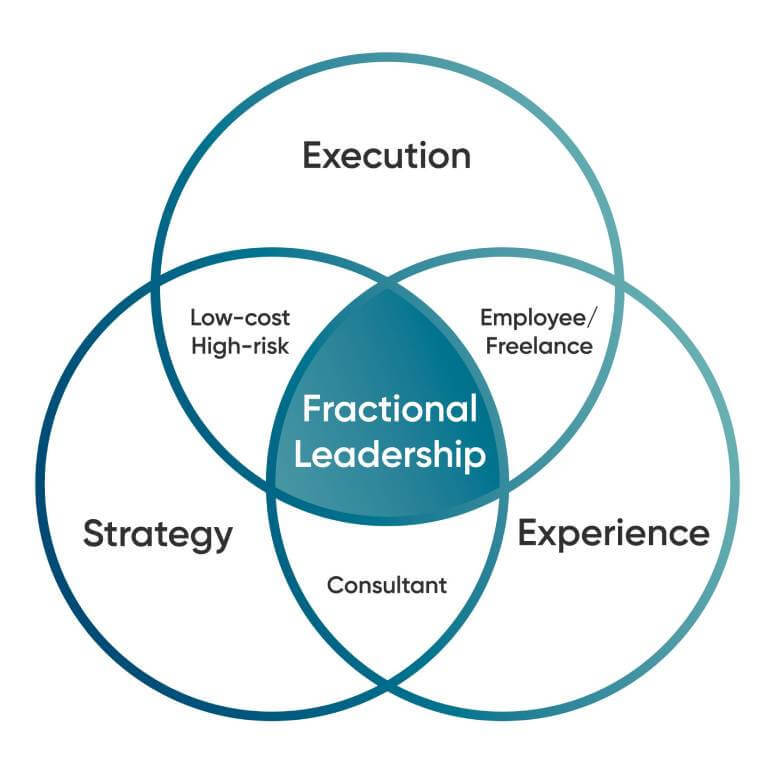
At some point, every expanding company will reach a turning point where the founder, office manager, or bookkeeper who is handling informal HR responsibilities hits their limit. It doesn't always happen all at once. Rather, it manifests as a series of situations that seem more difficult than they need to be, until they become a real business problem.
None of these is failure. These are all natural growth signs. Nevertheless, there are also signs that your business has reached a stage where people's decisions matter, and you are needlessly taking risks without HR leadership.
If you recognize three or more of these, it's time to consider fractional HR leadership.
You are hiring on a whim and whoever is available. Some hires work, some don't, and there's no consistent talent strategy that can explain why.
An employee asks a question about parental leave, remote work or a workplace issue, and there is no clear, consistent answer. Your employee handbook is out of date or in a basic document that doesn't reflect your business.
The founder or CEO is the point of contact for all major HR decisions. All compensation, performance, team conflicts and terminations are consolidated, which slows down the business and adds to decision fatigue.
At 30 or 50, the culture is beginning to change from strong to weak. New employees are not assimilating the same way, expectations are not uniform, and the initial company culture is not as easy to see or keep.
As your business grows, so does what a fractional HR leader does for you. The support is not one-size-fits-all. It varies depending on the size of your company, the complexity of your organization, and the stage of your people operations. Let's take a look at what the HR leader's role is at each stage of growth.
At this stage, most companies do not have formal HR systems in place. The founder is responsible for hiring, employee matters, and day to day decisions. Policies are not formal, and the team is small enough that most issues are addressed through discussion. But there is a risk lurking in the background: no compliance with employment regulations, inconsistent hiring, no structured onboarding, and little documentation if there are problems.
This is the stage where things start to break under growth. Job roles become blurred, communication is inconsistent, and new hires don't fit in as well. The founder is no longer able to address all the people issues directly. Some companies hire an HR coordinator, but the strategic level of HR leadership remains absent.
At this level, companies have departments, managers, and increasing organizational complexity. The people function needs to become a strategic enabler for growth and not a reactive support function. A fractional HR leader works on the bigger picture of architecture and future-proofs the company.
A fractional HR leader at a growth-stage company performs a broad spectrum of strategic duties that are all aimed at alleviating founder burden and enhancing HR infrastructure.
Enterprise-level complexity is not required for growing companies. We create practical people strategies that are relevant to your current stage, relevant to what matters most at this stage, and scalable without constant rebuilding as you grow.
Bad hires are expensive at any scale, but in a 30-50 person company, one bad hire can have a big impact on momentum. We structure talent acquisition, standardize interviews, and develop onboarding processes that enhance retention and performance.
We assist in the development of key HR policies, systems and frameworks, and liaise with legal and internal stakeholders. The aim is to fill compliance gaps and create scalable bases without over-complicating things.
Informal structures break down as teams grow. We assist in the creation of clear organizational structures, reporting lines, and decision-making processes that enable growth without unnecessary bureaucracy.
The most significant change in scaling companies is from managing to leading. We train founders and leadership teams in people management, performance conversations, and creating accountability at scale.
A fractional HR engagement is a temporary arrangement, by design. Once the company is ready, we can assist in defining the role, support the recruitment process, assess candidates and ensure a seamless transition to a new HR leader who has a solid foundation in place.
Sarah Seale Inc has been assisting businesses from startup to scaling up and into full-fledged operations in various industries. We've established HR foundations from scratch, mentored first-time HR hires, and supported founders in moving from doing it all to delegating to capable teams. This work has been recognised with a Corporate Vision Award, and has been experienced in some of the most dynamic and complex areas of the market.
The founder remains in charge of all people's decisions directly. Hiring continues to be reactive, policies are still informal, and risk accumulates slowly over time. It works until it doesn't, and then the expense is legal liability, loss of key employees, or years of cultural damage.
The real cost: Low monthly expenditure, high hidden HR risk.
A full-time VP of People or CHRO who has the experience to lead a full HR function. Completely committed, completely involved, daily service. Usually pays $150K–$300K+ per year plus benefits, and takes 2–6 months to hire.
True cost: High investment, usually too early for companies with less than 150 employees.
HR leadership at the senior level, part-time. Most companies that are in their growth stage begin with two to four days per month and ramp up support as they hire, restructure, or change their organization. No lengthy recruitment cycle, no long-term overhead commitment, and no delay in access to executive-level people strategy.
True cost: Fraction of full-time cost, immediate access to senior HR expertise.
A straight talk about your business, your people problems and the problems that are putting pressure on your leadership. No sales pitch, just clarity on where you are and what support may be needed.
We establish priorities, time commitment and engagement structure. Most companies start with a light fractional HR services model and grow as the business grows.
Work starts right away - with meeting your team, understanding the dynamics, and tackling the most pressing HR issues first. Effort is focused where risk is highest, and early progress is focused and visible.
The engagement evolves as your company evolves. Support is higher when growing or transitioning and lower when in stability. If applicable, we support you in your transition to a permanent HR leader with a structured handoff.
The pressure starts to be felt by most companies from 15 to 30 employees. This is where HR complexity, hiring inconsistencies, and policy gaps start to pose a real operational risk. When founders are spending a lot of time on people management without any formal training, it's time for fractional HR leadership.
Often yes. An HR coordinator is responsible for administrative duties such as onboarding, benefits, and tracking systems. A fractional HR leader is responsible for strategic aspects of HR, including organizational design, workforce planning, leadership development, and decision-making. The roles are complementary, not redundant.
The majority of companies in the 15-75 employee size begin with 2-4 days of HR advisory services per month. This includes continuous strategy, leadership support and priority initiatives. The model scales up during hiring surges, restructuring, or complex people situations.
There are two options. Many fractional HR engagements are remote, and involve on-site visits for leadership sessions, team alignment, or sensitive discussions. The structure is flexible to meet your business requirements and geography in Canada, the United States and abroad.
Experience covers technology, manufacturing, professional services, cannabis, and regulated or high growth industries. The fundamental people issues of scaling organizations are the same across industries. The method is flexible to regulatory and talent environment variations.
Usually when the HR workload is full-time and the budget is adequate, and it is generally between 100 and 200 people, depending on the growth rate and complexity. A good fractional HR professional will lead this transition and help with hiring, onboarding, and knowledge transfer.
Complex transitions are supported. This encompasses restructuring, post-merger integration, CCAA proceedings, full organizational change management, pre- and post-deal M&A HR advisory services.
Comprehensive fractional HR solutions for growth-stage businesses, including leadership support, people strategy, team scaling, and organizational development.
LEARN MOREEstablish transparent structures, roles and decision-making processes to eliminate bottlenecks and facilitate scalable HR leadership.
LEARN MORELeadership hiring support and scaling teams with high impact, such as executive search and talent acquisition strategy in line with business growth.
LEARN MORE